
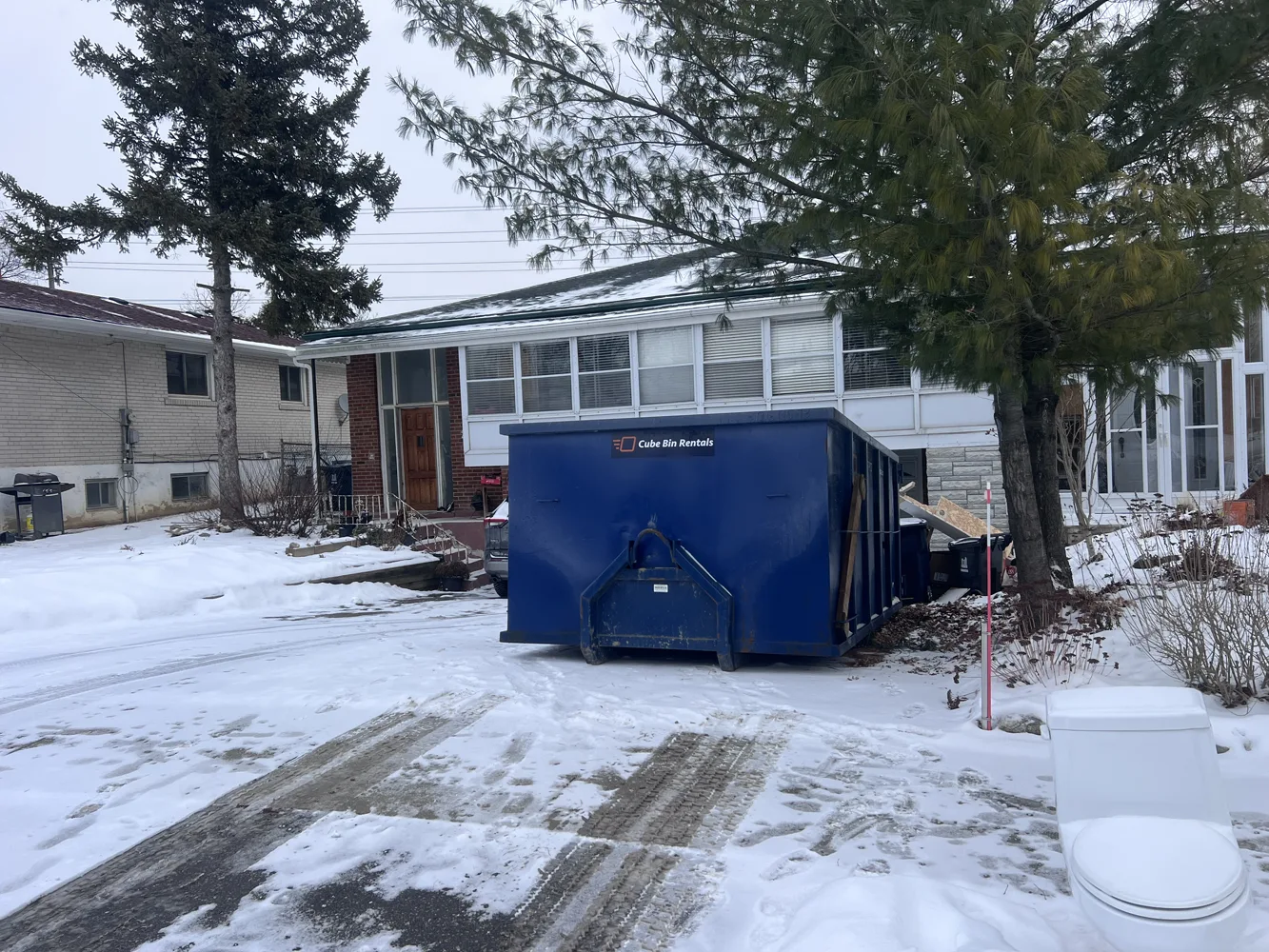
When booking a waste container for a renovation, property cleanout, or construction project, bin size is not the only factor to consider. The weight of the materials you dispose of can also affect your final rental cost. Before arranging a garbage bin rental, it is important to understand how much waste is included in the quoted price and what happens if your load exceeds that allowance.
Cube Bin Rentals includes 1 metric ton of waste with its standard garbage bin rentals. If the total weight exceeds this amount, an additional charge of $135 per metric ton applies, calculated on a prorated basis. Understanding this allowance can help you choose the right container, estimate your project expenses, and avoid unexpected overage charges.
What Does 1 Metric Ton Mean in a Garbage Bin Rental?
A metric ton, also called a tonne, equals 1,000 kilograms. This is the weight allowance included with Cube Bin Rentals’ standard garbage bin pricing. You can find further details about the company’s rental pricing and included services.
For example, if your project generates 800 kilograms of accepted waste, it remains within the included 1-metric-ton allowance. However, if the total disposal weight reaches 1,200 kilograms, you have exceeded the allowance by 200 kilograms.
It is important to understand that the weight allowance is separate from the physical capacity of the container. A bin may have enough room for additional materials, but that does not mean the extra weight is included in the rental price.
How Much Waste Can You Put in a Bin Before Overage Charges Apply?
Cube Bin Rentals includes 1 metric ton of waste with its standard rental pricing, regardless of whether you choose a smaller or larger standard garbage bin.
The company’s listed standard bin options include:
- 4-yard bin: Suitable for tight spaces, narrow driveways, and smaller cleanup projects.
- 8-yard bin: A practical option for small renovations and landscaping projects.
- 10-yard bin: Suitable for smaller remodeling jobs, such as kitchen and bathroom renovations.
- 14-yard bin: Commonly used for whole-house cleanouts and contractor projects.
- 20-yard bin: Designed for larger renovation and construction projects.
Each of these standard bins includes the same 1-metric-ton weight allowance. Choosing a larger container gives you more volume, but it does not increase the included weight limit. For more information about selecting a suitable container, see this bin size guide.
This distinction is especially important when disposing of heavy materials. A smaller quantity of dense construction debris can weigh more than a much larger volume of lightweight household items.
What Happens If Your Garbage Bin Exceeds 1 Metric Ton?
If the total weight of your waste exceeds the included 1 metric ton, additional charges apply.
Cube Bin Rentals lists an overage rate of $135 for each additional metric ton, prorated. This means the charge is calculated according to the additional weight rather than automatically charging for a complete extra metric ton when you only exceed the allowance by a smaller amount. You can also refer to this bin rental cost guide for more information about rental expenses.
For example, consider the following estimated overage calculations:
| Total waste weight | Weight over allowance | Estimated overage charge |
|---|---|---|
| 1,000 kg | 0 kg | $0 |
| 1,100 kg | 100 kg | $13.50 |
| 1,250 kg | 250 kg | $33.75 |
| 1,500 kg | 500 kg | $67.50 |
| 2,000 kg | 1,000 kg | $135 |
These examples show how prorated charges work based on the listed $135-per-metric-ton rate. The actual disposal weight determines the final overage amount.
Which Materials Can Cause Your Bin to Become Too Heavy?
Not all waste materials have the same weight. Some household items are relatively lightweight, while construction and renovation materials can add substantial weight even when they do not take up much space.
1. Concrete, Bricks, and Asphalt
Concrete, bricks, and asphalt are dense materials commonly generated during driveway repairs, demolition, and outdoor renovation projects. Even a relatively small quantity can contribute significant weight to a container. For more details about handling this type of debris, see the guide to concrete disposal.
Cube Bin Rentals offers a separate 4-yard clean-fill bin for materials such as concrete, interlock, asphalt, gravel, and soil. These materials should not be placed in the standard 8-, 10-, 14-, or 20-yard bins.
2. Soil and Excavation Waste
Soil, sod, and excavation debris can quickly increase the total weight of a disposal load. If your project involves removing ground material, choosing the appropriate clean-fill option is important. This soil disposal guide explains considerations for projects involving heavy ground materials.
3. Roofing Materials
Roofing projects can generate shingles, underlayment, and other demolition debris. These materials can become heavy when collected in larger quantities, so consider their weight when estimating your disposal needs.
4. Drywall and Renovation Debris
Drywall, flooring, cabinets, and other renovation materials contribute to the overall weight of a bin. The amount generated depends on the size of the project and the materials being removed.
5. Household Furniture and General Junk
Furniture, mattresses, cardboard, packaging, and general household clutter can take up considerable space. Their weight varies depending on the material, size, and condition of the items.
Why Bin Volume and Weight Allowance Are Different
One of the most common misunderstandings when renting a garbage bin is assuming that a larger container automatically includes a higher weight allowance.
Bin volume is measured in cubic yards, which describes how much space the container can hold. Weight is measured in kilograms or metric tons and describes how heavy the loaded waste is.
For example, a 20-yard bin can hold significantly more material by volume than a 4-yard bin. However, both standard options from Cube Bin Rentals include 1 metric ton of waste in the listed rental price.
This means you should consider both the amount of space your project requires and the type of material you plan to dispose of. A large load of lightweight household junk may use more container space without exceeding the weight allowance. A smaller load of concrete or soil may reach the weight limit much sooner.
What Is the Difference Between Standard Waste and Clean-Fill Disposal?
Choosing the correct disposal option is particularly important when your project involves heavy construction materials.
Cube Bin Rentals offers a 4-yard clean-fill bin at a flat rate of $350. This option is intended for materials such as concrete, interlock, asphalt, gravel, soil, or a mixture of these clean-fill materials.
However, clean-fill pricing applies only when the load contains eligible clean-fill materials. If general waste is mixed with clean-fill material, the flat-rate arrangement no longer applies. The listed charge becomes $330 per delivery and pickup, including 1 metric ton of waste. Additional weight is charged at $135 per metric ton, prorated.
The standard 8-, 10-, 14-, and 20-yard bins are not suitable for clean-fill materials such as concrete, interlock, asphalt, gravel, and soil.
Before booking, explain the materials your project will generate so you can select the appropriate container and disposal arrangement.
How to Avoid Unexpected Weight Overage Charges
Managing disposal weight starts before the bin arrives. A few practical steps can help you make a more informed choice and reduce the possibility of additional charges.
1. Identify Heavy Materials Before Booking
Make a list of the materials you expect to remove. If your project involves concrete, soil, bricks, or other dense debris, discuss the appropriate disposal option with the rental company.
2. Choose the Correct Bin Type
Do not select a container based on size alone. Consider whether your waste consists mainly of general household junk, renovation debris, or clean-fill materials. Using the correct bin type helps avoid disposal complications.
3. Keep Different Waste Materials Organized
If your project generates different categories of waste, separate materials where practical. This makes it easier to identify what is going into the container and helps prevent restricted or unsuitable materials from being mixed into the load. This waste sorting guide provides additional information about organizing disposal materials.
4. Avoid Overloading the Container
The waste must remain within the height of the bin. Cube Bin Rentals does not allow overloading, and material extending above the container may be unloaded at the site. Customers are responsible for cleaning up and disposing of any excess waste.
5. Confirm Pricing Before Delivery
Ask about the included weight allowance, overage rate, rental duration, and any location-based surcharge. Cube Bin Rentals’ listed standard prices include delivery, pickup, and up to 10 days with the bin. Additional rental days cost $10 per day, subject to availability. Prices exclude HST.
Plan Your Garbage Bin Rental in Toronto With Cube Bin Rentals
Understanding the 1-metric-ton allowance helps you plan your waste disposal costs more accurately. Whether you are clearing out a home, renovating a kitchen, removing construction debris, or managing a larger property project, choosing the right bin involves considering both volume and weight.
Cube Bin Rentals offers standard bin sizes ranging from 4 to 20 cubic yards, with 1 metric ton of waste included in the listed standard rental price. Additional weight is charged at $135 per metric ton on a prorated basis. For projects involving concrete, soil, asphalt, or other clean-fill materials, the separate 4-yard clean-fill option may be more suitable.
Before arranging your garbage bin rental in Toronto, discuss your project materials and estimated waste volume with Cube Bin Rentals. This will help you select the appropriate container, understand the applicable charges, and contact Cube Bin Rentals to plan your rental with fewer surprises.
Frequently Asked Questions
1. How much weight is included in a garbage bin rental from Cube Bin Rentals?
Cube Bin Rentals includes 1 metric ton, equivalent to 1,000 kilograms, of waste with its standard bin rental pricing. Any weight exceeding this allowance is subject to additional charges.
2. How much does Cube Bin Rentals charge for exceeding 1 metric ton?
The listed overage rate is $135 per additional metric ton, calculated on a prorated basis. The final charge depends on how much the disposal weight exceeds the included allowance.
3. Does a larger garbage bin include a higher weight allowance?
No. The standard 4-, 8-, 10-, 14-, and 20-yard bins each include 1 metric ton of waste. A larger container provides more physical capacity but does not increase the included weight allowance.
4. Can I put concrete or soil in a regular garbage bin?
No. Cube Bin Rentals’ standard 8-, 10-, 14-, and 20-yard bins are not suitable for concrete, interlock, asphalt, gravel, or soil. A separate 4-yard clean-fill bin is available for eligible materials.
5. What happens if I mix general waste with clean-fill materials?
If general waste is mixed with clean-fill materials, the $350 flat-rate clean-fill arrangement no longer applies. The listed standard rate of $330 per delivery and pickup, including 1 metric ton of waste, applies instead. Additional weight is charged at $135 per metric ton, prorated.