
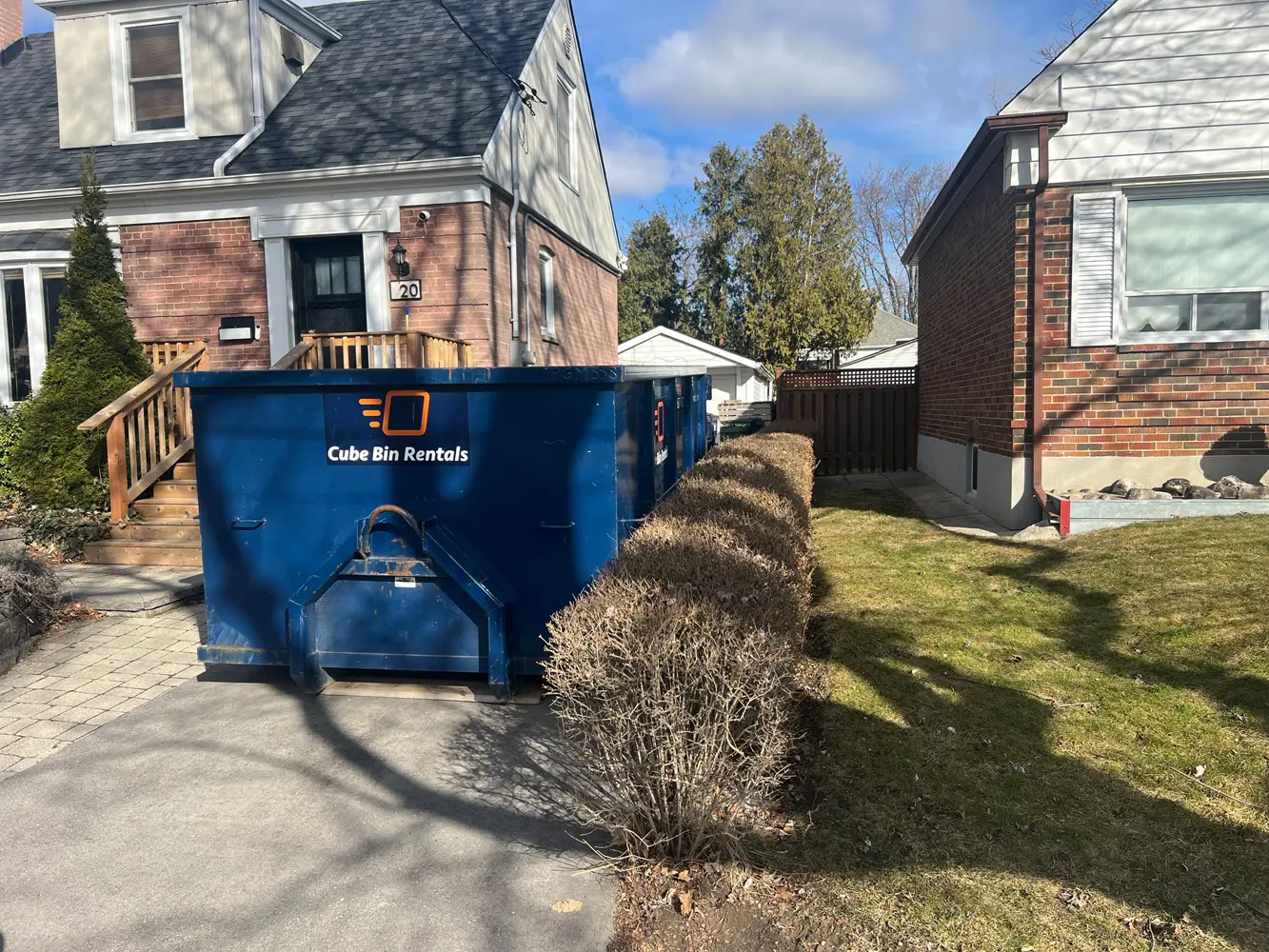
Landscaping projects can transform an outdoor space, but they can also create far more waste than homeowners expect. Removing old garden beds, trimming shrubs, replacing fencing, rebuilding a patio, clearing soil, or tearing out damaged landscape features can quickly produce piles of branches, lumber, sod, gravel, soil, and general debris. Choosing the right landscaping bin rental size before the work begins gives you a dedicated place for approved materials and helps prevent the yard, driveway, or sidewalk from becoming overwhelmed.
Cube Bin Rentals helps homeowners, landscapers, renovators, and contractors across Toronto and surrounding GTA communities manage project debris with practical bin options. The company offers several container sizes for different types of work and can also support larger projects through Rental Bin Services, Site Clean-Up, and Haulage Services. Understanding the correct landscaping bin rental size can help you control costs, reduce unnecessary handling, and keep your outdoor project moving from the first cleanup day to the final sweep.
Why Landscaping Bin Rental Size Matters
The right landscaping bin rental size depends on much more than the square footage of your yard. A small property can still generate a large amount of debris if the work includes fence removal, garden demolition, old patio materials, or years of accumulated outdoor junk. At the same time, a large yard receiving only light pruning and seasonal cleanup may need much less capacity. Estimating the actual materials you will remove gives you a better starting point than choosing a container based only on property size.
Choosing too small can create problems halfway through the job. The bin may fill before the cleanup finishes, forcing you to pause work or arrange another service. Choosing more capacity than you realistically need can also take up valuable driveway space. The goal is to select a landscaping bin rental size that provides enough room for the full project while still fitting comfortably on the property and allowing safe delivery and pickup.
Think About Volume And Material Type Together
Landscape waste varies significantly in density. Branches and fencing can occupy large amounts of space without becoming extremely heavy, while soil, gravel, concrete, interlock, and sod can add substantial weight in a surprisingly small volume. The correct landscaping bin rental size therefore needs to account for both how much space the debris occupies and what the materials actually weigh.
Match The Bin Size To Your Landscaping Project
Start by defining exactly what your landscaping project includes. A spring garden cleanup has very different requirements from removing an old deck, rebuilding a retaining area, replacing fencing, or preparing a backyard for a new patio. The best landscaping bin rental size should match the complete scope instead of only the first stage. List every major item or material you expect to remove before deciding which container will work.
Cube Bin Rentals offers 4-yard, 8-yard, 10-yard, 14-yard, and 20-yard options, giving customers flexibility for both targeted residential work and larger property projects. Small containers may suit compact cleanup jobs, while medium or larger bins can provide the room needed for bulky landscaping debris. When several outdoor improvements are happening together, choosing the landscaping bin rental size based on the combined waste usually makes more sense than planning each stage separately.
Small Garden And Seasonal Cleanup Projects
Light garden maintenance may involve branches, old planters, damaged outdoor items, plant material, and general yard clutter. When the waste volume remains modest, a compact bin can provide enough capacity without occupying excessive driveway space. Before booking, separate materials that can use municipal yard waste programs from other debris so your landscaping bin rental size reflects only the material that truly needs the container.
Fence, Deck And Outdoor Structure Removal
Fence panels, posts, lumber, railings, old decking, and outdoor structures create bulky loads with many awkward shapes. Breaking approved materials into manageable sections can help use the container efficiently, but these jobs often need more space than homeowners initially estimate. A medium or larger landscaping bin rental size may reduce the risk of running out of capacity while removal work is still underway.
Choosing Between 4, 8, 10, 14 And 20 Yard Bins
A 4-yard container can work for smaller or specialized projects where volume is limited, while an 8-yard bin may suit modest landscaping work or targeted outdoor cleanup. A 10-yard option gives more room for mixed project debris and can be useful when landscaping overlaps with household cleanup. The best landscaping bin rental size should leave enough capacity for unexpected materials without creating unnecessary difficulty with driveway placement.
For more substantial property cleanups, fence replacement, deck removal, or several outdoor improvements at once, a 14-yard or 20-yard container may provide better flexibility. Larger bins can handle bulky approved debris more efficiently, provided the site has suitable access. Cube Bin Rentals can help customers compare the project scope with available dimensions so the landscaping bin rental size fits both the waste and the property.
When It Makes Sense To Size Up
Consider moving to the next size when your estimate sits close to the capacity limit, especially if the project includes bulky materials or areas you have not fully cleared yet. Outdoor work often uncovers hidden boards, broken pavers, old landscaping materials, and stored junk. Choosing a slightly larger landscaping bin rental size can provide useful flexibility when the final waste volume is difficult to predict.
Heavy Landscaping Materials Need Special Planning
Soil, gravel, concrete, asphalt, and interlock behave differently from ordinary landscaping debris because they become extremely heavy before they take up much space. You should not select a landscaping bin rental size for these materials using the same method you would use for branches, lumber, or general outdoor junk. Tell Cube Bin Rentals exactly which heavy materials you plan to remove before booking so the team can recommend an appropriate solution.
Clean fill also needs to remain separate from standard mixed waste. Cube Bin Rentals uses a dedicated approach for materials such as concrete, interlock, asphalt, gravel, and soil rather than treating them like ordinary renovation or household debris. Mixing heavy clean fill with general waste can change handling and disposal requirements. The correct landscaping bin rental size is therefore only part of the decision. Choosing the proper waste stream matters just as much.
Why Soil And Concrete Fill A Bin Differently
A container filled halfway with soil or broken concrete may weigh far more than a visually full bin containing branches or light household debris. That difference can affect transportation, disposal, and safe loading. When your landscaping bin rental size needs to accommodate excavation or hardscape removal, weight should guide the plan before volume does.
Sort Yard Waste Before Loading Your Bin
Not every material from your yard needs to enter a rental container. The City of Toronto Yard Waste program accepts certain materials such as leaves, twigs, roots, hedge and shrub trimmings, small tree branches, weeds with excess soil removed, and mulch when residents follow the City’s collection requirements. Separating eligible yard waste before determining your landscaping bin rental size can reduce the amount of container space you need and support proper waste diversion.
The City does not treat every outdoor material as ordinary yard waste. Soil, sod, larger wood, and several other materials require different handling, which is why it is important to identify the waste before starting. Toronto residents can also use the Waste Wizard when they are unsure where a specific item belongs. A smarter landscaping bin rental size estimate comes from sorting first and measuring the remaining disposal volume second.
What To Do With Questionable Outdoor Items
Backyard and landscaping projects sometimes uncover batteries, chemicals, old pesticides, paint, electronics, propane cylinders, or other materials stored in sheds and garages. Keep these items separate rather than placing them into the landscaping bin. Checking the exact disposal method before loading protects the rest of the waste stream and helps ensure your landscaping bin rental size is used only for appropriate materials.
Plan Your Bin Placement Before Delivery
The container must fit the property as well as the project. Measure your driveway or intended placement area before booking and think about garage access, neighbouring driveways, landscaping, gates, overhead branches, and the truck’s delivery path. A large landscaping bin rental size may sound appealing, but it will not help if it cannot be delivered safely or prevents normal access throughout the project.
The loading path also matters. If workers must carry every fence panel, branch, or piece of lumber around several obstacles, cleanup becomes slower and more tiring. Place the bin as close to the active work area as practical while maintaining safe truck access. A well-positioned landscaping bin rental size can save significant labour because approved debris moves directly from the work zone into the container instead of passing through temporary piles.
Protect The Driveway And Keep Access Open
Inspect the driveway before delivery and identify cracked asphalt, decorative pavers, or fragile surfaces. Keep vehicles, equipment, and new landscaping materials away from the truck route throughout the rental. Once Cube Bin Rentals places the container, organize the project around that location rather than attempting to reposition it yourself.
Load Landscaping Debris More Efficiently
Efficient loading can make a major difference in how much usable space you get from your landscaping bin rental size. Break down approved bulky materials where practical, lay long pieces carefully, and distribute weight throughout the container instead of concentrating everything on one side. Large fence panels, shelving, or dismantled outdoor structures can waste significant space if workers simply throw them into the bin without planning.
Keep the load at or below the top edge and avoid creating unstable piles. Do not add materials simply because an empty pocket remains if the material itself is restricted or excessively heavy. The goal is not to squeeze every possible item into the landscaping bin rental size. The goal is to create a safe, balanced, approved load that the rental company can pick up and transport without unnecessary complications.
Landscaping Bin Loading Checklist
A simple loading system helps everyone working on the property follow the same process. Use the following checklist to get more practical value from your landscaping bin rental size while keeping the cleanup organized:
- Separate municipal yard waste before loading.
- Keep soil, concrete, asphalt, gravel, and interlock separate from mixed debris.
- Remove hazardous or questionable items.
- Break down approved bulky materials when practical.
- Place heavier approved debris evenly across the bottom.
- Fill open spaces with smaller acceptable materials.
- Keep all debris below the top edge.
- Maintain clear access for pickup.
- Stop and ask before loading any material you are unsure about.
How The Right Size Can Save Time And Money
Choosing the correct landscaping bin rental size helps prevent unnecessary interruptions. If the container fills too early, you may have to stop dismantling structures or clearing the yard while waiting for another disposal solution. A properly sized bin lets homeowners and contractors continue loading as the project progresses, reducing repeated handling and helping the outdoor work stay on schedule.
Cost control also improves when you correctly identify both waste volume and material type. Oversized containers may occupy more property space than necessary, while undersized containers can lead to additional service needs. Sorting heavy materials correctly prevents another common source of complications. A realistic landscaping bin rental size helps you build waste removal into the original project budget instead of dealing with it as an unexpected problem later.
Combine Bin Rental With Other Project Support
Some landscape projects need more than a container. Rental Bin Services can provide the disposal setup, Site Clean-Up can help restore order after active work, and Haulage Services can support the movement of dirt, gravel, or small construction equipment when appropriate. If the property improvement also includes interior tear-out, Non-Structural Demolition may support that separate stage of the job.
Why Choose Cube Bin Rentals
Cube Bin Rentals understands that landscaping waste can range from light seasonal debris to bulky construction materials and extremely heavy clean fill. The company offers multiple bin sizes, helping homeowners and contractors choose a landscaping bin rental size that fits the project instead of forcing every cleanup into the same solution. Local experience across Toronto and surrounding communities also helps when properties have tight driveways or other placement limitations.
Customers can also connect their bin rental with related project support. Rental Bin Services, Site Clean-Up, Haulage Services, and Non-Structural Demolition provide useful options when landscaping is part of a larger renovation or property improvement plan. Cube Bin Rentals can help customers assess waste type, placement, and landscaping bin rental size before delivery so cleanup becomes an organized part of the project rather than an afterthought.
Choose Your Landscaping Bin Before Work Begins
The best time to choose your landscaping bin rental size is before the first fence panel comes down, the first garden bed is cleared, or the first load of outdoor debris starts piling up. Walk through the project area, identify every material, separate municipal yard waste and clean fill, measure the placement space, and estimate the full volume of approved waste. Good planning makes the difference between a smooth cleanup and a yard filled with temporary debris piles.
Cube Bin Rentals can help GTA homeowners, landscapers, and contractors match the container to the real scope of the project. Whether you are clearing an overgrown yard, replacing fencing, removing an old deck, or preparing for a complete landscape redesign, choosing the correct landscaping bin rental size gives your project a cleaner and more efficient start. Contact Cube Bin Rentals before work begins so the bin, delivery timing, and related services can fit your landscaping schedule.
Frequently Asked Questions
- What landscaping bin rental size works for a small yard cleanup?
A compact 4-yard or 8-yard option may work for smaller projects with limited approved debris. The correct landscaping bin rental size depends on how much material remains after you separate eligible municipal yard waste. - What landscaping bin rental size should I choose for fence removal?
Fence removal can create bulky boards, panels, and posts, so an 8-yard, 10-yard, or larger option may be appropriate depending on the length of fencing and other debris involved. - Does landscaping bin rental size depend on weight?
Yes. Landscaping bin rental size planning must consider weight because soil, gravel, concrete, asphalt, and interlock become very heavy even when they occupy relatively little space. - Can soil go into any landscaping bin rental size?
No. Soil should not automatically enter a standard mixed-waste container. Tell Cube Bin Rentals about soil, concrete, gravel, asphalt, or interlock so the company can recommend an appropriate clean-fill solution. - What landscaping bin rental size works for deck removal?
The right landscaping bin rental size depends on the deck dimensions, type of lumber, railings, stairs, and any additional debris. Medium or larger bins are often more practical for substantial deck removal. - Can yard waste affect the landscaping bin rental size I need?
Yes. Separating leaves, branches, trimmings, and other materials that qualify for municipal yard waste programs may reduce the amount of debris that needs space in your rental bin. - Which Cube Bin Rentals services support landscaping projects?
Rental Bin Services, Site Clean-Up, and Haulage Services are particularly useful for landscaping projects, while Non-Structural Demolition may support a larger renovation that includes both interior and exterior work.